Payment Processing + Merchant Services — dedicated MIDs, not aggregator freezes
Unison Payment Solutions
Your processor is overcharging you — here's the proof
Interchange-plus pricing reveals what flat-rate hides. Most merchants save 20–30% the month they switch. Dedicated merchant accounts, POS hardware, high-risk underwriting, CRM integration, and intelligent chargeback prevention — not a patched-together aggregator stack.
- Interchange-plus pricing — stop subsidizing rewards cards
- Dedicated merchant accounts — no freezes, no shared pools
- High-risk approvals: casinos, peptides, kratom, CBD, dropshipping
- Free equipment placement — Clover, PAX, Dejavoo
- 99.9%+ terminal uptime and same-day funding options
Effective fee stack
20–30%typical savings vs. flat-rate
Merchant accounts, POS, gateways, and CRM — one provider, one relationship.
0% processing
Available
Cash discount programs that eliminate card processing fees on qualifying transactions.
Approval speed
24–48 hrs
Standard business approvals. High-risk categories 3–7 business days.
Support
24/7 U.S.
Named account manager plus around-the-clock support — not a ticket queue.
Merchants served
10,000+
Across 24+ industries including high-risk, retail, ecommerce, and services.
Integrations & platforms we work with
Everything your payment stack should include
Processing, hardware, high-risk underwriting, and CRM integration — under one roof with one account manager.
Interchange-plus pricing that stops the overcharges
Flat-rate processors charge you the same markup on every card — rewards, debit, corporate. Interchange-plus separates network costs from our margin so regulated debit and standard cards pass through at their actual rate. Most businesses save 20–30% compared to Stripe, Square, or PayPal.
- ✓Dedicated MIDs — your account, not a shared aggregator pool
- ✓Debit and regulated cards at actual interchange — no flat-rate inflating
- ✓Same-day or next-day funding available
- ✓Cash discount and surcharging programs where appropriate
Transaction flow
Debit rate
0.05%
Actual interchange
Flat-rate
2.9%
Same card, overcharged
Complete control over how every transaction is processed
Interchange-plus pricing. Dedicated merchant accounts. POS hardware. High-risk categories. All managed by one team.
Six pillars of a merchant account that actually works
Most processors sell you one thing. Unison builds the full infrastructure — pricing, accounts, hardware, risk, protection, and integration.
Interchange-plus pricing
Stop subsidizing rewards cards. Interchange-plus separates network costs from processor markup — regulated debit and standard cards pass through at their actual rate. Most businesses save 20–30% versus flat-rate.
Dedicated merchant accounts
Underwritten MIDs — not a shared pool that freezes when risk models twitch. Your account, your descriptors, your bank relationship. No surprise holds.
POS hardware & terminals
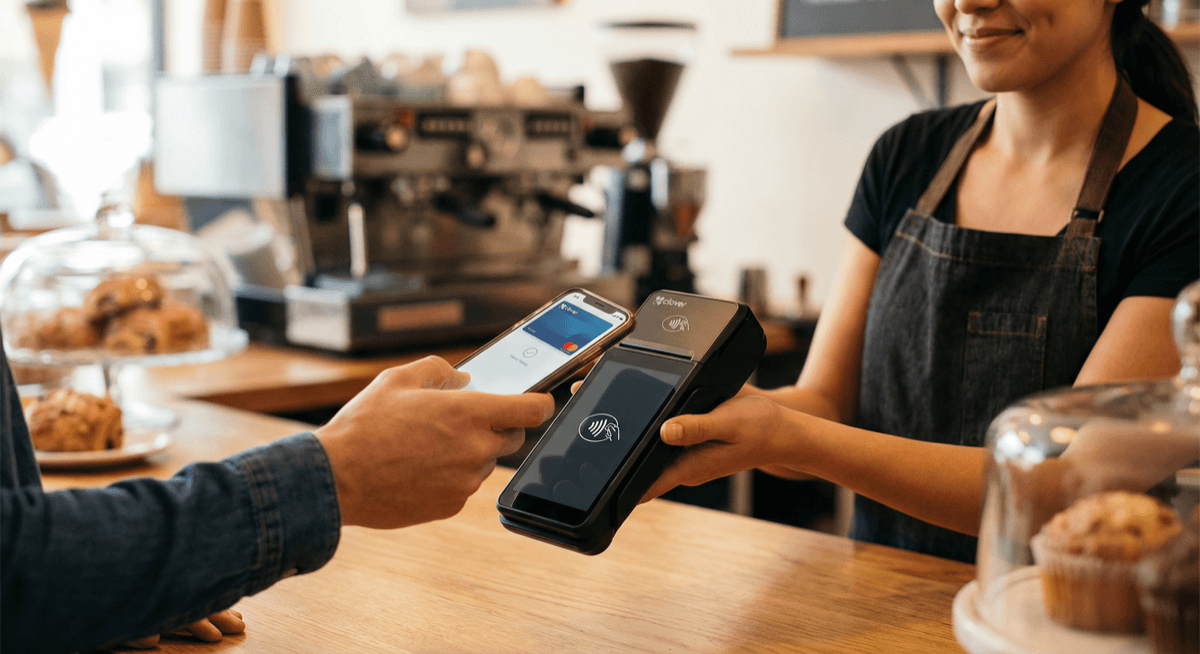
Clover, PAX, Dejavoo — countertop, mobile, self-service. Hardware paired with your merchant account at fair pricing, not a separate lease trap. Contactless, chip, swipe, QR.
High-risk processing
Peptides, CBD, nutraceuticals, firearms, adult, gambling — categories where banks actually approve. Honest underwriting fit, not "instant approval" promises that get reversed.
Chargeback prevention
Ethoca and Verifi alert workflows, descriptor alignment, and response playbooks. Prevention is operational discipline plus tooling — not a guarantee of zero disputes.
CRM & gateway integration
GoHighLevel, Salesforce, HubSpot, PayTrace — payments sync to CRM records, trigger automations, and feed reporting. One source of truth for revenue and customer data.
Dedicated merchant accounts vs. aggregators — the real difference
Stripe, Square, and PayPal are aggregators. They approve you instantly because you share a master merchant account with thousands of other businesses. When their risk model flags your category — or your volume spikes — they freeze funds or close your account with little warning.
A dedicated merchant account is yours. Underwritten by an actual bank, with your own MID, your own descriptors, and transparent reserve terms discussed before you sign. Processing costs are lower because interchange-plus separates network fees from processor markup instead of bundling everything into a flat rate.
We are transparent about limits — some categories require reserves, some have restricted issuer coverage, and high-risk underwriting takes longer. You get the real tradeoffs, not a glossy guarantee deck.
Account comparison
What merchants say after switching
Real results from real businesses — not paid endorsements.
Switching to Unison's cash discount program saved us over $24,000 a year in processing fees. The transition was seamless and our customers barely noticed.
Michael R.
Restaurant Owner, Dallas TX
After being rejected by 5 processors, Unison got us approved for our peptide business in 3 days. They actually understand our industry.
Dr. Sarah K.
Research Supply Company
The Clover system transformed our bar. Tab management is a breeze, and the speed during happy hour is incredible. Best investment we've made.
James T.
Bar & Lounge Owner, Miami FL
Analytics & reporting that drive decisions
Revenue trends, approval ratios, churn signals, and funnel attribution — inside one reporting layer. Reconcile batches and fees without spreadsheets so your team acts on facts, not guesses.
Revenue forecasting
Project future revenue by product, funnel, or billing cycle with live transaction data.
Approval rate monitoring
Track approval ratios by MID, card type, and processor — catch declines before they compound.
Chargeback analytics
Win-rate tracking by reason code and issuer. Identify patterns and fix root causes.
Deposit reconciliation
See what hit the bank and why — batch-level detail without rebuilding spreadsheets.
Approval rate
96.4%
Avg. funding
1.2 days
Decline salvage
18%+
Uptime
99.9%
Monthly transaction volume growth
Live POS dashboard
OnlineOpen tabs
14
Avg ticket
$47
Tips today
$892
More tabs. More alcohol sales. Faster happy hours.
Restaurants and bars lose money every time a POS system slows down service. Clover Station and Flex handle tab management, tableside ordering, and tip adjustments at the speed your happy hour demands. Cash discount programs mean you keep more of every alcohol sale — margins that used to go to processing fees.
- ✓Tab management — open, split, transfer, close from any terminal
- ✓Tableside ordering and payment with Clover Flex
- ✓Cash discount saves on every pour — 0% processing on qualifying transactions
- ✓Tip management, pre-auth, and age verification built in
- ✓Inventory tracking for bottles, kegs, and menu items
Free equipment placement — no lease traps
Clover, PAX, Dejavoo — terminals matched to your volume, pre-configured and shipped ready to process. Free placement programs available for qualifying merchants. 99.9%+ uptime so your business never stops accepting payments.
- ✓Free equipment placement — no separate lease with hidden buyout terms
- ✓Pre-configured hardware ships ready to process on day one
- ✓99.9%+ terminal uptime — countertop, mobile, and self-service
- ✓Contactless, chip, swipe, QR code, and Apple Pay / Google Pay
- ✓Clover Station, Mini, Flex, Go — plus PAX and Dejavoo options
- ✓Same-day swap program if equipment fails
Intelligent chargeback fighting — not just notifications
Most processors notify you after the damage is done. Unison layers prevention, response, and recovery into your account from day one.
Prevention
Stop chargebacks before they happen with alert networks and proactive tooling.
- ✓Ethoca and Verifi real-time alert workflows
- ✓Billing descriptor alignment with customer expectations
- ✓Clear refund policies surfaced at checkout
Response
When disputes land, respond fast with evidence that wins.
- ✓Deadline tracking and automated reminders
- ✓Pre-built response templates by dispute reason code
- ✓Evidence assembly: receipts, delivery proof, comms
Recovery
Recover revenue and improve win rates over time.
- ✓Representment strategy tuned to your category
- ✓Win-rate analytics by reason code and issuer
- ✓Pattern detection to fix root causes, not just symptoms
More than just card processing
The features serious merchants need — from funding speed to consumer financing — all connected to your account.
Same-day and next-day funding
Most transactions fund within 1–2 business days. Faster options available depending on volume and account history.
Cash discount & surcharging
Pass processing costs to card users where legal and appropriate. Accept cash and debit at face value — net 0% processing on qualifying transactions.
Virtual terminal & invoicing
Key in phone orders, send payment links, and invoice B2B clients without extra hardware. All transactions feed the same reporting and CRM sync.
Subscription & recurring billing
Memberships, retainers, SaaS-style plans — with retry logic, dunning, and failed-payment workflows that prevent silent churn.
Consumer financing (BNPL)
Affirm, Afterpay, and buy-now-pay-later options for higher-ticket sales. Increase average order value without absorbing credit risk.
Reporting that matches deposits
Reconcile batches, reserves, and fees without rebuilding spreadsheets. See what hit the bank and why — especially with multiple products or locations.
How getting started works
From application to processing in days, not weeks. Four steps to a merchant account that fits your business.
Apply online
Tell us what you sell, your monthly volume, and how you accept payments today. No commitment — just a conversation about fit.
Get approved
24–48 hours for standard businesses. 3–7 days for high-risk. You receive a dedicated account structure where approved — not a generic pooled profile.
Receive equipment
POS terminals arrive pre-configured. Gateway credentials are provisioned. CRM integrations are mapped and tested before go-live.
Start processing
1–2 day funding, interchange-plus pricing from day one, and a named account manager for changes when your business evolves.
Industries where we get you approved
Online casinos, peptides, kratom, CBD, dropshipping, nutraceuticals — categories where most processors say no. We match you to banks that actually support your model.
Online casinos & sports betting
Licensed iGaming operators, sports wagering platforms, and fantasy sports — bank-backed MIDs with compliance-aware underwriting for regulated jurisdictions.
Get approved →Peptides & research chemicals
Research supply companies rejected by 3–5 processors before reaching us. Approved in days, not weeks — with a bank that actually understands the category.
Get approved →Kratom merchant accounts
Kratom is classified high-risk by most banks. We match you to acquiring programs that support botanical products with stable, long-term processing.
Get approved →CBD & cannabis processing
CBD retail, dispensaries, and hemp-derived products. Cashless ATM and card-present programs where state and local regulations allow.
Get approved →Dropshipping & ecommerce
High-volume, high-chargeback-risk category. Dedicated MIDs with chargeback prevention layered in from day one — not after your account gets frozen.
Get approved →Nutraceuticals & supplements
Subscription continuity, free trials, and health products — categories where bank fit and billing descriptor alignment prevent chargebacks before they start.
Get approved →All industries we serve
24+ categories — standard and high-risk — with dedicated underwriting for each.
Restaurants & bars
POS, tab management, cash discount on alcohol sales.
Retail & brick-and-mortar
Clover, PAX, Dejavoo — fair pricing, no lease traps.
Ecommerce & funnels
Online gateways, recurring billing, stable MIDs.
Peptides & research
High-risk approvals with compliance-aware underwriting.
Cannabis & CBD
Dispensary and retail programs where regulations allow.
Online casinos & gambling
iGaming, sports betting, fantasy sports processing.
Kratom & botanicals
Stable bank-backed MIDs for kratom merchants.
Dropshipping
High-volume processing with chargeback prevention.
Nutraceuticals
Subscription continuity and supplement brands.
Professional services
Virtual terminal, invoicing, and B2B flows.
Subscriptions & SaaS
Recurring billing with retry logic and CRM sync.
Firearms & sporting goods
FFL-compliant processing, stable bank relationships.
Is this you?
If several of these sound familiar, you are past the stage where a generic checkout button is enough.
- →You are paying flat-rate processing fees and suspect debit cards and standard transactions should cost less.
- →You were frozen, paused, or shut down by Stripe, Shopify Payments, Square, or PayPal and need a stable merchant account.
- →You sell in a regulated or high-risk category and "instant approval" processors keep reversing course.
- →You need POS hardware that works with your merchant account — not a separate lease with hidden costs.
- →You want chargeback prevention tools, not just chargeback notifications after the damage is done.
- →You run subscriptions or recurring billing and need retry logic that actually recovers failed payments.
- →You manage multiple locations, brands, or channels and need reporting that survives tax season.
See what switching to Unison looks like
Send us a recent processing statement. We'll show you the savings on interchange-plus — no commitment, no pressure.
Aggregator checkout vs. dedicated merchant account
Why businesses move from Stripe, Square, and PayPal to Unison.
| Topic | Aggregator (Stripe, Square, PayPal) | Unison |
|---|---|---|
| Pricing model | Flat % on everything | Interchange-plus — debit savings add up |
| Account type | Shared pool / instant approval | Dedicated MID, manual underwriting |
| Account stability | Can freeze without warning | Your account — transparent reserve terms |
| High-risk | Often prohibited or shut down | Specialist programs for 24+ categories |
| POS hardware | Proprietary (locked in) | Clover, PAX, Dejavoo — your choice |
| Chargeback tools | Basic notifications | Ethoca/Verifi prevention + response playbooks |
| Support | Chat & tickets | Named account manager + implementation |
| Reserves & holds | Sudden, opaque | Explained during underwriting |
Honest comparisons: Clover vs Square, PayAnywhere vs Square, PayPal alternatives.
Schedule your next step
Drop your CRM scheduler, calendar embed, or custom form below. Scripts can target #crm-embed.
Frequently asked questions
What types of businesses do you work with?
How does interchange-plus save me money?
Can you process high-risk categories?
What POS hardware do you offer?
How fast can I get approved?
What if Stripe, Shopify Payments, or PayPal shut me down?
Do you integrate with CRMs like GoHighLevel?
What chargeback tools do you offer?
See Unison in action
Send us a recent statement. We'll show you the interchange-plus savings, walk through the merchant account structure, and answer every question — no commitment.
Or call (925) 290-6003 · email info@unisonpayment.com