If you've ever heard stories of peptide merchants getting shut down "overnight," it's usually because a risk review was triggered. Shutdowns rarely happen randomly. They happen when the processor or bank decides the account's risk is higher than what they agreed to underwrite.
The safest approach is to start with a peptide-friendly high-risk merchant account that's underwritten for your category and volume—instead of hoping a generic setup won't get reviewed later.
What "Shutdown" Really Means in Payments
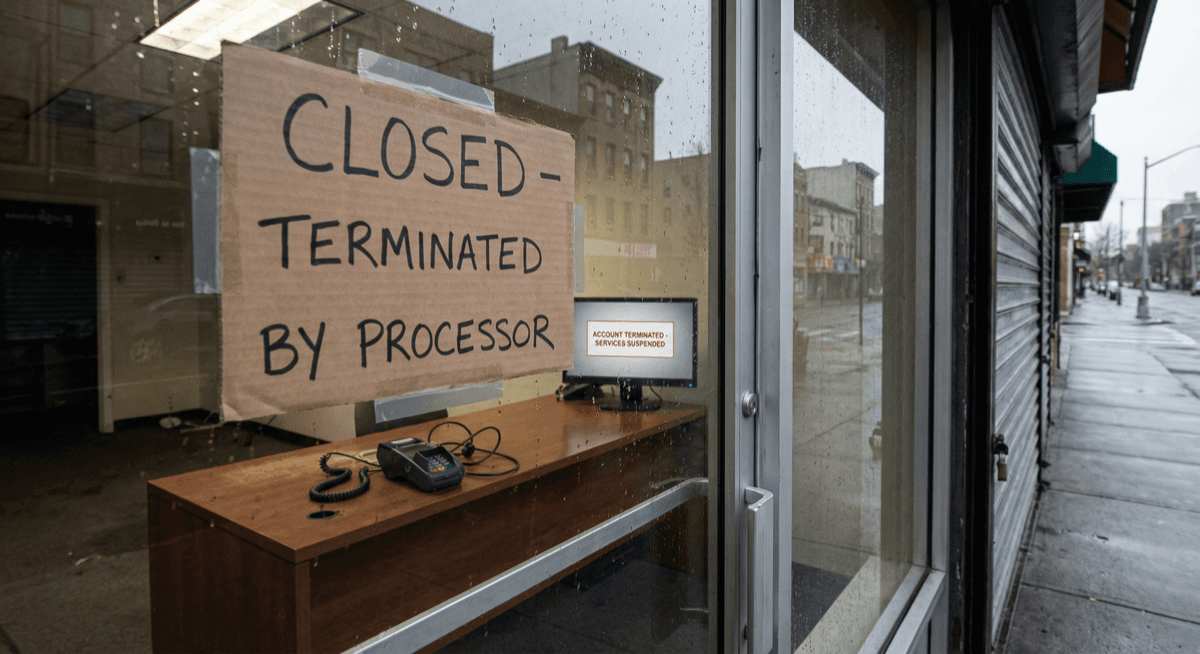
A shutdown can look like different things, depending on severity:
- Hard decline wave: approvals drop suddenly due to risk restrictions
- Funding hold: payouts pause while the bank investigates risk
- Reserve increase: more funds withheld to cover potential refunds/chargebacks
- Account termination: processing is stopped entirely
For ecommerce merchants, the result is the same: lost revenue, operational disruption, and a scramble to restore checkout.
Top Reasons Peptide Businesses Get Shut Down
1) The account was never underwritten for peptides
This is the most common root cause. A merchant can start processing under a setup that isn't truly designed for peptide sales. Then a routine review (or automated monitoring alert) escalates the account—and the processor decides it no longer fits their risk profile.
Starting with the right program matters. That's why Unison offers a peptide-focused path through its Peptides & Research Chemicals program. For a detailed breakdown of how these accounts work, see high-risk merchant accounts for peptide companies.
2) Chargebacks or disputes rise above comfort levels
Processors and banks don't just look at the number of chargebacks—they look at the ratio. If disputes increase while your transaction count stays flat, your ratio spikes quickly and triggers a review.
If disputes are a risk area, building prevention into your operation (and pairing it with tools like chargeback protection) can help stabilize the account long-term.
3) Website or marketing language creates compliance risk
Underwriters pay close attention to how a peptide business is positioned online. If your site copy implies medical outcomes, it can be perceived as higher regulatory risk—leading to stricter controls or termination.
Risk teams also look for missing policies and unclear customer expectations. Confusion creates refunds and chargebacks, which escalates risk.
4) Sudden volume spikes and unusual transaction patterns
Big growth is great—but sudden, unplanned spikes can look like fraud or a compromised checkout flow. Monitoring systems flag patterns like:
- Monthly volume doubling (or more) without prior alignment
- Ticket size increases that don't match your normal average
- Large waves of failed attempts from the same region or IP ranges
A stable high-risk setup works best when underwriting expectations match your growth plan.
5) Weak fraud controls (fraud gets in, then disputes follow)
When fraud slips through, it often turns into chargebacks. Enough fraud-driven disputes can force the processor to protect the bank by tightening approvals or terminating the account.
A properly tuned gateway helps reduce this risk. If you need an ecommerce-ready approach, Unison can pair your account with a high-risk friendly payment gateway.
How to Prevent a Shutdown (Practical Steps)
Start with peptide-friendly underwriting
Prevention begins before you process your first transaction. A peptide-friendly account is built to handle the category responsibly—so you're not constantly one review away from disruption.
Make your website "underwriting-proof"
- Clear policies: refund, shipping, terms, privacy
- Visible support: make it easy to contact you
- Consistent positioning: reduce compliance ambiguity
- Product clarity: eliminate customer confusion
Control disputes before they become chargebacks
- Use recognizable billing descriptors
- Send tracking fast and set delivery expectations
- Respond quickly to support tickets
- Offer reasonable refund handling to prevent escalations
Plan growth (don't surprise the bank)
If you're running a promotion, scaling ads, or expanding to new regions, align your processing plan with your provider so sudden spikes don't trigger automatic risk brakes.
Early Warning Signs of an Impending Shutdown
Don't wait for the termination notice. Watch for these signals:
| Warning Sign | What It Means | What to Do |
|---|---|---|
| Approval rate dropping (below 85%) | Risk controls tightening | Contact your processor immediately |
| Funding delays (1-3 extra days) | Manual review of batches | Ask for status update, prepare backup |
| New reserve requirement | Bank perceiving increased risk | Comply and document your risk reduction efforts |
| "Account review" notification | Formal risk re-evaluation | Prepare all compliance documentation |
| Chargeback ratio above 0.8% | Approaching Visa/MC threshold | Implement [chargeback prevention](/services/chargeback-protection) tools |
| Increased decline codes (05, 51) | Issuer-level restrictions | Review fraud filters, check for card testing |
The earlier you catch these signals, the more time you have to address the underlying issue before it escalates to termination.
Seeing more declines, slower funding, or unusual review behavior can be early warning signs. Connecting your payment data to a CRM gives you real-time visibility into these metrics — chargeback ratios, volume trends, and funding status all update automatically inside your customer records, so you can catch problems before they trigger a review.
If You've Already Been Shut Down
Being terminated isn't the end. Here's the immediate recovery playbook:
1. Get the termination reason in writing — you need to know the specific reason code 2. Check your MATCH list status — see our MATCH list guide for details 3. Preserve your customer data — export transaction records, customer lists, and subscription data before access is revoked 4. Apply with a high-risk specialist — standard processors won't touch you after termination, but specialists like Unison work with terminated merchants daily 5. Fix the root cause — if chargebacks caused the shutdown, implement prevention tools. If compliance was the issue, update your website and policies.
Unison can review your setup and recommend the safest path to stabilize processing. If you're operating in a high-risk category, stability comes from proper underwriting, a tuned gateway, and ongoing monitoring—exactly what Unison's high-risk processing program is designed to do. If your account has already been shut down, read Peptide Merchant Account Terminated? What to Do Next for a step-by-step recovery guide.