A strong refund policy reduces chargebacks by setting clear expectations: timelines, eligibility, how refunds are issued, and how customers contact support. Underwriters also look for visible, consistent policies because unclear or missing policies correlate with higher dispute rates.
This guide provides a copy-paste framework that peptide merchants can adapt, along with placement guidance and common mistakes to avoid.
Why Your Refund Policy Directly Impacts Merchant Account Stability
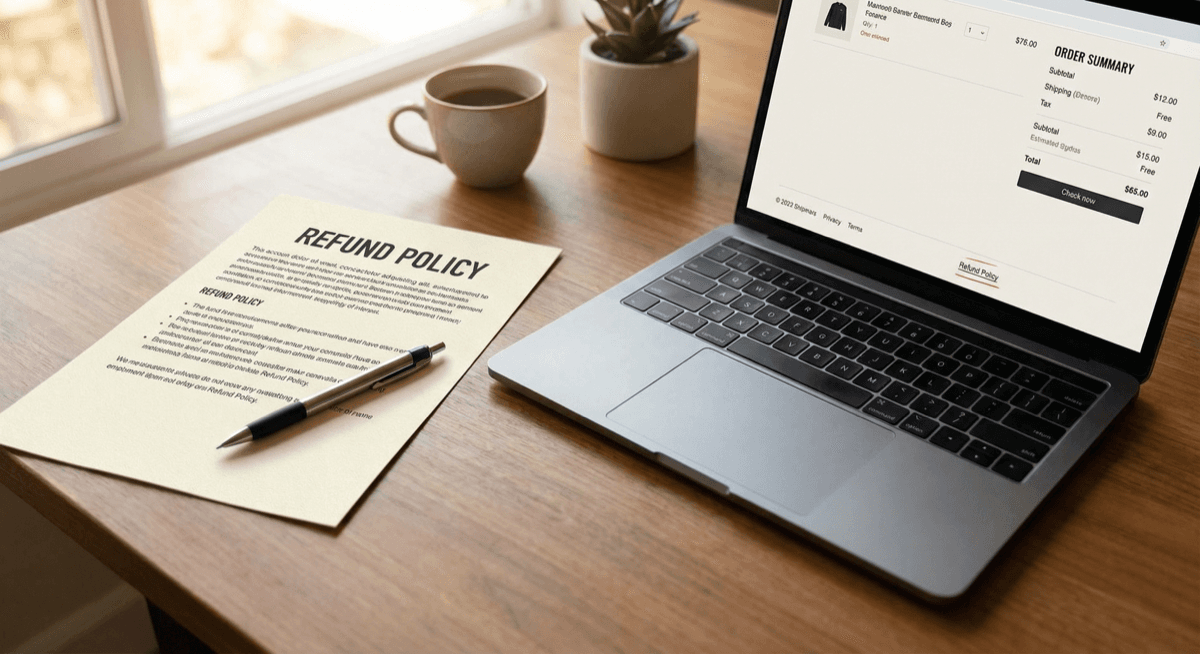
Refund confusion is one of the top drivers of chargebacks in peptide ecommerce. When customers do not understand their options, they bypass the merchant and go straight to their bank.
The most common dispute reasons that a strong refund policy prevents:
- "Product not as described" — customer expected something different and did not know how to get a refund
- "Not received" — customer assumed no refund was possible and filed a bank dispute instead
- "Unrecognized charge" — customer forgot about the order and saw no easy way to resolve it
Each of these chargebacks impacts your dispute ratio, which affects rolling reserves, processing holds, and long-term account stability.
A clear refund policy gives customers a direct path to resolution that keeps disputes out of the chargeback system.
Refund Policy Template (Adapt to Your Business)
Section 1 — Refund eligibility
Define what qualifies for a refund and what does not:
Eligible for refund:
- Damaged items (with photo evidence)
- Wrong item shipped
- Order not received within the stated delivery window (after carrier investigation)
Not eligible for refund:
- Opened or used products (unless damaged)
- Orders outside the refund window
- Items purchased during clearance or final-sale promotions (if applicable)
Section 2 — Time window
Use a clear, specific statement:
> "Refund requests must be submitted within [14/30] days of delivery confirmation."
Avoid vague language like "within a reasonable time." Processors and underwriters want specificity.
Section 3 — How to request a refund
Require:
- Order number
- Email address used at checkout
- Brief description of the issue
- Photo evidence if the product arrived damaged
Provide a dedicated email address or support form for refund requests. Do not make customers search for how to start the process.
Section 4 — Refund method and timing
Explain clearly:
> "Approved refunds are issued to the original payment method. Please allow 5-10 business days for the refund to appear on your statement after approval."
If you offer store credit as an alternative, state that clearly as an option — not a replacement for refunds.
Section 5 — Return shipping instructions (if applicable)
Clarify:
- Whether the customer or the business pays for return shipping
- How return labels are provided
- Whether a return is required for a refund (some peptide businesses refund without requiring a return for low-value items)
Section 6 — Contact information
Include:
- Support email address
- Support phone number (recommended — processors favor merchants with phone support)
- Support hours and expected response time
Placement Checklist (Where Your Refund Policy Must Appear)
Underwriters check multiple locations during the approval process. Make sure your refund policy is accessible from:
- Footer link on every page — standard placement that customers and underwriters expect
- Checkout page — near the payment button, either as a visible link or summary
- Order confirmation email — include a link or brief summary of refund terms
- Help/Support page — if you have one, link to the full policy
- Product pages — optional but helpful, especially for higher-ticket items
If your refund policy is only on a standalone page with no links pointing to it, underwriters may miss it — and customers definitely will.
This placement strategy aligns with the full website compliance checklist that peptide merchants need to pass underwriting.
Common Refund Policy Mistakes That Hurt Peptide Merchants
Mistake 1 — "No refunds under any circumstances"
This sounds protective, but it backfires. Customers who cannot get a refund from you will dispute the charge with their bank. You lose the money AND get a chargeback on your record.
Mistake 2 — Vague eligibility language
"Refunds may be available in certain circumstances" gives customers no confidence. Be specific about what qualifies and what does not.
Mistake 3 — Hard-to-find refund process
If customers have to email three different addresses or call during narrow hours, they will give up and file a bank dispute instead. Make the process simple and accessible.
Mistake 4 — No stated timeline
"We will process your refund as soon as possible" is not specific enough. Customers want to know when to expect their money back. Provide a clear timeline (e.g., "5-10 business days after approval").
How Refund Policies Work With Your Larger Payment Strategy
A strong refund policy is one element of the dispute prevention framework that keeps your peptide merchant account stable:
- **Billing descriptors** — reduce "unrecognized charge" disputes
- **Shipping policies** — reduce "item not received" disputes
- **Fraud prevention tools** — block illegitimate transactions before they happen
- **Chargeback protection** — catch disputes early with alert systems
Together, these elements create the stability that processors reward with lower reserves, better terms, and longer account tenure.
{{CTA:Get a Policy Review:Not sure if your refund policy meets underwriting standards? Contact Unison for a free review of your policies and checkout compliance.:/contact}}
Next Steps
If your chargeback ratio is above 0.5% or you are preparing a merchant account application, review your refund policy using the template above. Clear policies are one of the fastest wins for improving both approval odds and account longevity.
Learn more about peptide payment processing: Peptide Payment Processing.
*Disclaimer: This template is for informational purposes and should be adapted to your specific business model. It does not constitute legal advice.*