Quick Answer: What CBD Merchants Need to Know
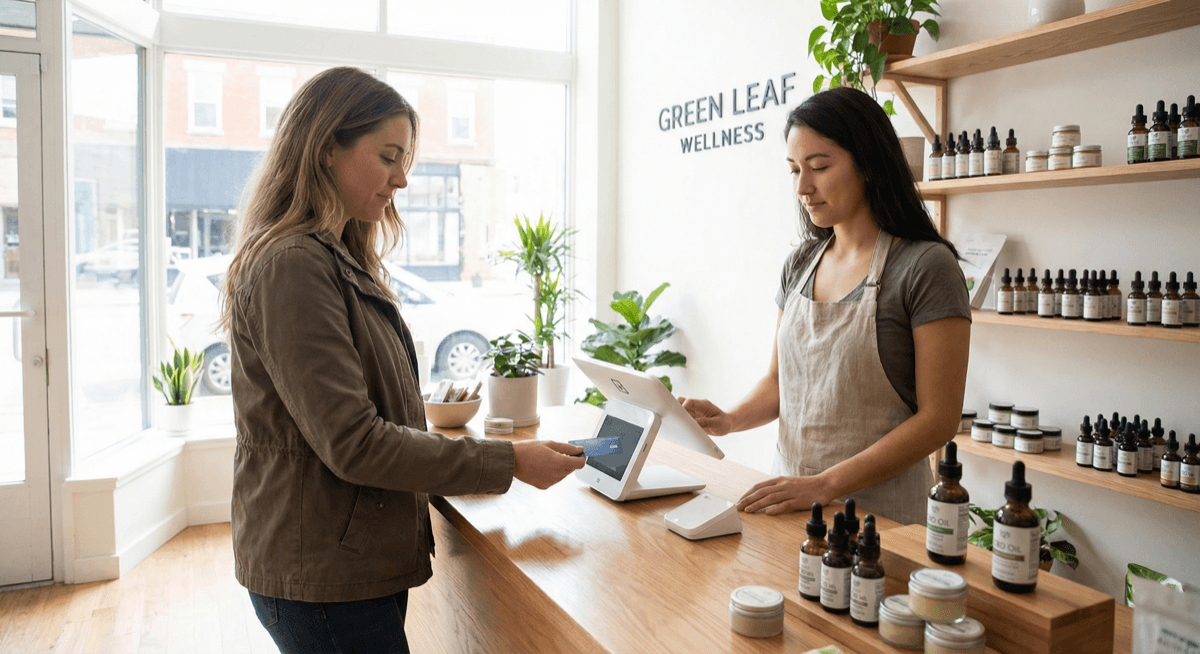
CBD and hemp products are federally legal under the 2018 Farm Bill, but most payment processors still decline CBD merchants. The solution is a dedicated high-risk merchant account from a processor that specializes in CBD — not a mainstream aggregator like Stripe, Square, or PayPal that will freeze your funds and terminate your account.
Unison Payment Solutions provides CBD merchant accounts with no monthly fees, no early termination fees, interchange-plus pricing, and fast approvals (typically 5-10 business days). Call (925) 290-6003 or contact us for a free consultation.
Why CBD Is Classified as High-Risk
Despite being federally legal since December 2018, CBD is still classified as "high-risk" by acquiring banks and card networks. Understanding why helps you navigate the approval process more effectively.
Regulatory complexity
The CBD industry operates under a patchwork of federal, state, and local regulations. The Farm Bill legalized hemp-derived CBD with 0.3% THC or less, but the FDA has not approved CBD as a dietary supplement or food additive, which creates enforcement uncertainty. Some states have additional restrictions on CBD product types, sales channels, or marketing. Banks that process CBD transactions absorb the compliance risk of this regulatory ambiguity.
Higher chargeback rates
CBD products have historically experienced higher chargeback rates than standard retail. Customers dispute charges for reasons ranging from product dissatisfaction and shipping delays to buyer's remorse and confusion over billing descriptors. Chargebacks cost processors money and create liability — which is why they charge higher rates for the CBD category and require stronger fraud prevention controls.
Association with marijuana
Despite the legal distinction between hemp (0.3% THC or less) and marijuana (above 0.3% THC), many banks and processors still conflate the two. Their risk models were built when all cannabis was federally illegal, and updating those models to accommodate legal hemp products has been slow. This guilt-by-association means legitimate CBD merchants face the same processing barriers as businesses selling products that are still federally prohibited.
FDA enforcement uncertainty
The FDA has issued warning letters to CBD companies making health claims (e.g., "cures anxiety," "treats pain") and has not yet established a clear regulatory framework for CBD in foods and supplements. Banks view this uncertainty as a risk factor — if the FDA tightens enforcement, merchants making non-compliant claims could face legal action, and the processor is left holding the liability.
What Processors Require for CBD Approval
Acquiring banks that approve CBD merchants evaluate three things: product compliance, business legitimacy, and website compliance.
Product compliance
The single most important requirement is demonstrating that your products are legal. This means:
- Certificates of Analysis (COAs) from a third-party lab for every product, showing THC content at or below 0.3%
- Product labeling that accurately reflects contents, does not make FDA-prohibited health claims, and includes appropriate disclaimers
- Supplier documentation — if you don't manufacture your own products, processors want to see your supplier agreements and their COAs
- State compliance — hemp licenses, registrations, or certifications required by your state
COAs are non-negotiable. If you cannot provide current third-party lab results for your products, no reputable high-risk processor will approve your application.
Business legitimacy
Standard business documentation, similar to what any merchant account requires:
- Active business registration (LLC, Corp, or Sole Proprietorship)
- EIN from the IRS
- Business bank account statements (3-6 months)
- Processing history from previous processors (if available)
- Government-issued ID for all owners with 25%+ ownership
Website compliance
Your website is the first thing underwriters review — and the most common reason CBD applications get delayed:
- No health claims. Remove any language that claims CBD "cures," "treats," "heals," or "prevents" any condition. This includes testimonials that make therapeutic claims. The FDA has been clear that unapproved health claims for CBD are prohibited.
- Published policies. Refund/return policy, shipping policy, terms of service, and privacy policy — all accessible from every page.
- Contact information. Phone number, email, and physical address visible on the site.
- SSL certificate. HTTPS is required — non-negotiable.
- Age verification. Many processors require an age gate or age verification step for CBD purchases.
- Accurate product descriptions. Clear, honest descriptions without exaggerated claims about efficacy.
Why Stripe, Square, and PayPal Don't Work for CBD
If you have tried processing CBD sales through Stripe, Square, or PayPal, you have likely experienced frozen funds, account holds, or outright termination. This is not a mistake or oversight — these platforms explicitly prohibit CBD in their acceptable use policies.
These companies are payment aggregators — they process all merchants under a single master account and use automated risk screening to flag categories they do not want to underwrite individually. CBD triggers these systems because it overlaps with regulated substances in their risk models.
The consequences of trying to use an aggregator for CBD:
- Sudden account freeze — your money is locked with no timeline for release
- Funds held for 90-180 days — even after termination, aggregators hold your balance as a chargeback reserve
- No appeal process — aggregator decisions are final, with no meaningful review
- MATCH listing risk — terminated merchants can end up on the MATCH list, making it harder to get approved elsewhere
A dedicated high-risk merchant account from a specialist like Unison is fundamentally different. You get your own merchant ID, individual underwriting by analysts who understand CBD, and a processor that supports the category long-term.
CBD Payment Processing Options by Business Type
CBD eCommerce stores
Online CBD retailers need a payment gateway connected to a high-risk merchant account. Unison integrates with PayTrace and other gateways that support popular eCommerce platforms:
- Shopify — use Shopify as your storefront with a third-party payment gateway (not Shopify Payments, which uses Stripe and prohibits CBD)
- WooCommerce — payment gateway plugins connect your WooCommerce store to your high-risk merchant account
- BigCommerce — similar integration through supported payment gateways
- Custom sites — API integration for custom-built checkout flows
CBD retail stores
Brick-and-mortar CBD shops need a POS terminal configured for high-risk processing. Unison provides POS hardware from Clover, PAX, and Dejavoo that supports CBD merchant accounts. Features include inventory management, customer tracking, and compliance reporting.
CBD wholesale and B2B
Wholesale CBD operations often have larger average transaction sizes and fewer but higher-value orders. ACH payment processing is particularly valuable for B2B CBD — lower fees than card processing and fewer chargeback risks.
THC dispensaries
Traditional credit card processing is not available for THC products due to federal prohibition. Dispensaries have alternative options:
- PIN debit — customers use debit cards with PIN entry
- ACH payments — electronic bank transfers for online orders
- Cashless ATM / point-of-banking — debit-based solutions that function similarly to card payments
- App-based payments — mobile payment apps designed for cannabis
Unison helps dispensaries evaluate these options and implement the best solution for their specific operation.
The 2018 Farm Bill: What CBD Merchants Need to Know
The Agriculture Improvement Act of 2018 (Farm Bill) is the legal foundation for CBD payment processing. Key provisions:
- Hemp definition: Cannabis sativa with a delta-9 THC concentration of 0.3% or less on a dry weight basis
- Federal legality: Hemp and hemp-derived products (including CBD) are removed from the Controlled Substances Act
- Interstate commerce: Legal to transport hemp products across state lines
- Banking access: Banks are permitted to serve hemp businesses without federal legal risk
What the Farm Bill does NOT do:
- It does not override state laws — some states have additional restrictions on CBD sales, product types, or THC limits
- It does not authorize FDA-unapproved health claims — CBD cannot be marketed as a drug, dietary supplement, or food additive without FDA approval
- It does not legalize THC above 0.3% — marijuana remains federally prohibited
- It does not guarantee banking access — banks can still decline CBD merchants at their discretion
Understanding these boundaries is critical for maintaining compliance and keeping your merchant account stable long-term.
How to Maintain Your CBD Merchant Account
Getting approved is step one. Staying approved requires ongoing compliance:
Keep chargebacks below 1%. This is the most important metric for account stability. Use chargeback prevention strategies like Ethoca and Verifi alerts (available through Unison's chargeback protection), maintain clear billing descriptors, and prioritize customer communication.
Keep your COAs current. When you add new products or change suppliers, update your COAs and notify your processor. Selling products without valid lab results is a termination trigger.
Avoid health claims. Underwriters periodically review your website. If you add blog posts, social media content, or product descriptions with health claims after approval, your account is at risk. Keep all content compliant with FDA guidelines.
Communicate volume changes. If your processing volume increases significantly (seasonal spikes, new distribution, viral product), notify your processor in advance. Unexplained volume spikes trigger risk reviews.
Monitor your product mix. Adding Delta-8 THC, kratom, or other products not disclosed during underwriting can trigger termination. Discuss any product expansion with your processor before listing new items.
CBD Payment Processing Costs
Understanding the fee structure helps you evaluate processors honestly:
Interchange-plus pricing (what Unison uses)
Interchange is the wholesale cost set by Visa and Mastercard — it is the same regardless of your processor. Unison adds a transparent per-transaction markup on top of interchange. This model saves most CBD merchants 20-30% compared to flat-rate or tiered pricing because you pay the actual interchange rate (which varies by card type and transaction method) plus a consistent, disclosed margin.
Typical CBD processing costs
- Processing rate: 3.5-5.5% + per-transaction fee (varies by volume and risk profile)
- Monthly fees: $0 with Unison (no setup fee, no monthly minimum, no annual fee, no early termination fee)
- Gateway fee: Varies by gateway (PayTrace, Authorize.net, etc.)
- Chargeback fee: $15-25 per chargeback
- Rolling reserve: 0-10% depending on business profile (lower for established merchants with good chargeback history)
What to watch for with other processors
- Tiered pricing — bundles transactions into "qualified," "mid-qualified," and "non-qualified" tiers, often resulting in higher effective rates
- Monthly minimums — fees charged if you don't process enough volume
- Early termination fees — penalties for canceling before your contract ends (Unison has none)
- Hidden fees — PCI non-compliance fees, statement fees, batch fees, annual fees
For a detailed breakdown of processing costs, see our guide: How Credit Card Processing Fees Work.
Getting Started with CBD Payment Processing
1. **Contact Unison for a free consultation — call (925) 290-6003 or email info@unisonpayment.com 2. Compliance review — we audit your website and product documentation before applying 3. Application submission — we present your business to acquiring banks that support CBD 4. Underwriting and approval — typically 5-10 business days with complete documentation 5. Go live** — POS configuration, gateway setup, and staff training
Related resources:
- Cannabis & CBD Payment Solutions — our dedicated CBD industry page
- CBD Payment Processing 2026 Guide — updated rates, compliance, and approval timelines
- Best CBD Payment Processors Compared — 7 processors ranked on rates, approval speed, and contract terms
- High-Risk Merchant Accounts Explained — understanding the high-risk category
- How to Lower Credit Card Processing Fees — strategies that apply to CBD merchants
- Cash Discount Program — eliminate processing fees entirely with compliant dual pricing