How to Pick the Right Merchant Account Program
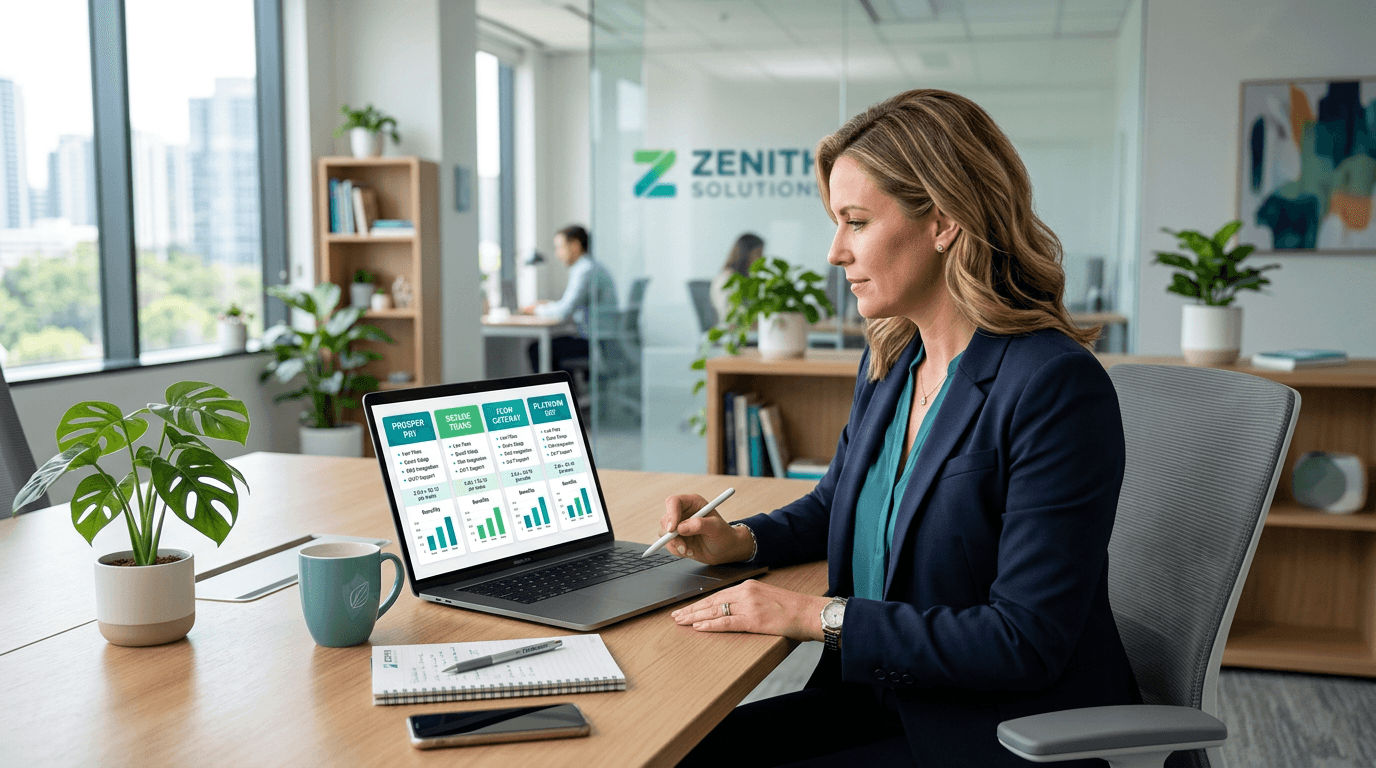
Choosing the wrong processing program costs money and creates friction. Choosing the right one saves 15-40% on fees and gives you an account that is underwritten for what you actually sell. Unison offers four distinct programs, and each one exists because different businesses have fundamentally different needs.
**The fastest way to find your match is the 60-second quiz.** But if you want to understand the logic behind it, read on.
Step 1: How Do You Accept Payments?
The first fork is your sales channel — how money physically reaches you.
In-person / storefront / invoicing: You swipe, tap, or dip cards at a terminal. You might also key in card numbers over the phone or send invoices. Restaurants, retail shops, salons, contractors, and service businesses typically fall here.
Online / eCommerce: Customers check out on your website via a payment gateway. Shopify, WooCommerce, BigCommerce, or a custom cart. Card-not-present transactions.
This distinction matters because dual pricing is only available for in-person and invoicing businesses. eCommerce merchants are automatically routed to an interchange program instead.
Step 2: What Do You Sell?
After sales channel, the next question is industry and product type. This determines whether you need a standard (low-risk) or specialized (high-risk) underwriting track.
Low-Risk Industries
Most brick-and-mortar and standard eCommerce businesses fall here:
- Restaurants, cafes, and food service
- Retail stores (clothing, electronics, home goods)
- Salons, barbershops, and spas
- Gyms and fitness studios
- Professional services (accounting, consulting, legal)
- Healthcare and dental offices
- Auto repair shops
- Home services and contractors
- General eCommerce selling standard consumer products
These businesses typically have low chargeback rates, straightforward products, and no regulatory complexity.
High-Risk Industries
Processors classify the following as high-risk due to elevated chargebacks, regulatory scrutiny, or reputational considerations:
- CBD, hemp, and cannabis (where legal)
- Kratom
- Adult products and sexual wellness
- Nutraceuticals and supplements with health claims
- Firearms and ammunition
- Online furniture and high-ticket eCommerce
- Travel agencies and timeshare
- Gambling and gaming
- Tobacco, vape, and e-cigarettes
- Debt collection and credit repair
- Tech support
- Fantasy sports and skill gaming
High-risk businesses need a processor with dedicated acquiring bank relationships for their category. Applying through a standard program leads to declines, freezes, or terminations. For a deeper dive, read our guide on high-risk merchant accounts.
Peptides and Research Chemicals
Peptide sellers are a specialized subset of high-risk that requires its own underwriting path. Unison's Peptide Processing program provides domestic merchant accounts with 96%+ card authorization rates at the gateway (separate from merchant account underwriting). LegitScript requirements vary by acquirer. If you sell peptides, this is your path — not the general high-risk program.
Step 3: Choose Your Pricing Model
Once you know your channel and risk tier, the pricing model follows naturally.
4% Dual Pricing (Storefront / Invoicing Only)
Dual pricing displays two prices: a cash price and a card price. Customers who pay with a card see a small service fee added at the register. The merchant's effective processing cost drops to near zero.
Who it's for: Brick-and-mortar businesses and invoice-based businesses that want to eliminate processing fees. Restaurants, retail, salons, contractors, and similar.
Who it's NOT for: eCommerce businesses. Card networks do not allow dual pricing on online transactions. If you sell online, choose one of the interchange programs below.
For a detailed breakdown: Cash discount vs surcharge vs convenience fee.
**Apply for 4% Dual Pricing →**
Interchange + Low Risk
Interchange-plus pricing passes through the actual wholesale interchange rate from Visa/Mastercard plus a small, fixed markup. This is the most transparent pricing model and is almost always cheaper than flat-rate processors like Square or Stripe at any meaningful volume.
Who it's for: Standard-risk businesses — retail, restaurants, service providers, and eCommerce merchants selling everyday products.
For savings estimates: How to lower credit card processing fees.
**Apply for Interchange + Low Risk →**
Interchange + High Risk
Same transparent interchange-plus structure, but underwritten through acquiring banks that specialize in high-risk verticals. Higher interchange rates are typical for these categories, but a dedicated high-risk account is far more stable than trying to hide your business type on a standard platform.
Who it's for: CBD, kratom, adult, supplements, firearms, travel, gambling, and other high-risk verticals. Does NOT include peptides (those have their own program).
**Apply for Interchange + High Risk →**
Peptide Processing
A fully domestic, peptide-specific merchant account program. Includes NMI or Authorize.net gateway integration, full shopping cart support (Shopify, WooCommerce, and hundreds more), and dedicated underwriting. Apply directly on our site — no external redirect.
Who it's for: Businesses selling peptides, research chemicals, and related products.
**Apply for Peptide Processing →**
Quick Decision Table
| Question | Your Answer | Recommended Program |
|---|---|---|
| Do you sell peptides? | Yes | Peptide Processing |
| Is your industry high-risk? | Yes | Interchange + High Risk |
| Do you sell primarily online? | Yes | Interchange + Low Risk |
| Do you want to eliminate processing fees? | Yes, and I'm in-person | 4% Dual Pricing |
| Standard business, prefer transparent rates? | Yes | Interchange + Low Risk |
Still Not Sure?
Take the 60-second quiz and we'll route you automatically. Or call (925) 290-6003 to speak with a Unison specialist who can review your business model and recommend the best path.